The Library That Made Me

New

The Library That Made Me podcast brings to life the stories of acclaimed Australian writers, thinkers, performers and other remarkable individuals as they reflect on the libraries that have shaped them. Hosted by Philllipa McGuinness, these stories reveal the funny, moving, surprising and deeply personal connections we have with libraries, as shared by contributors ranging from Anna Funder to Markus Zusak. A love letter to libraries everywhere, this podcast will make you wonder about the library that made you. 

Originally published in the book The Library That Made Me: 200 years of the State Library of NSW.
 

Episodes

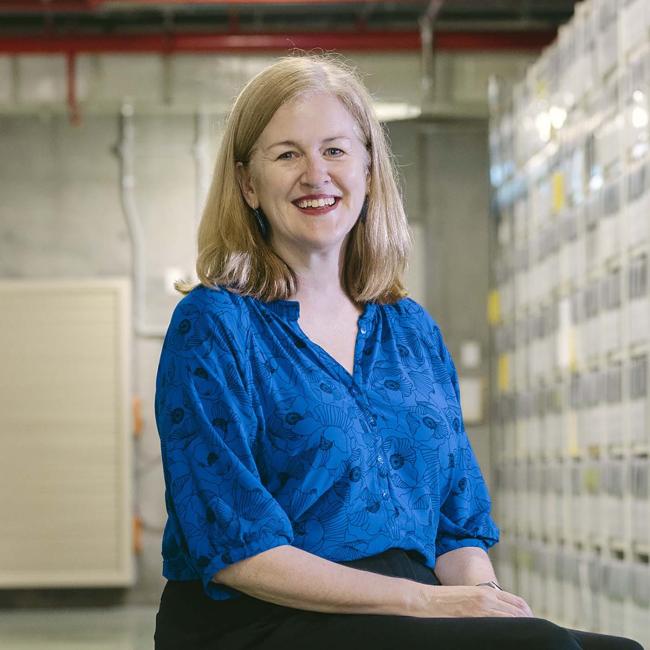
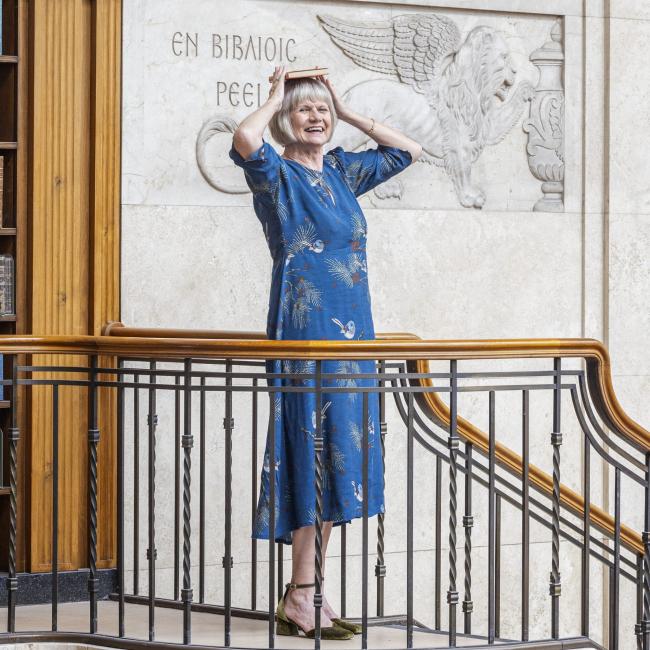
Photograph of a woman in a blue dress standing on an ornate staircase inside a library or historic building. She is smiling and holding a book on top of her head and there is , a marble wall with engraved text and a winged lion in the background.

The library that made Grace Karskens

Release Date

Grace Karskens – author and professor of history at the University of NSW – talks about the library that made her.

Episode Audio

LTMM_Podcast_Grace_Karskens.mp3

Transcript

Welcome to the Library That Made Me Podcast. 

I’m Phillipa McGuinness from the State Library of NSW. 

On this podcast, we ask some of Australia’s most loved writers, historians, thinkers and performers to share stories about the libraries that shaped them.   

Today you will hear from Grace Karskens. Grace Karskens is emeritus professor of history in the school of humanities and languages at the University of NSW. She is the author of multi-award-winning books including The Rocks, Life in Early Sydney, The Colony, A History of Early Sydney and People of the River: lost worlds of Early Australia. In 2026 she joined the Library Council of NSW  

I’m Grace Karskens and this is the library that made me.

Opposite our school on Windsor Road at Baulkham Hills, in north-west Sydney, there stood an old weatherboard School of Arts building. Inside, it was dim and cool, and the roar of the traffic muffled and faded. Down some creaking wooden steps was a library — just one room, lined floor to ceiling with books, and filled with their comfortable musty smell. Dust danced in the shafts of sunlight pouring through the old sash windows.

Baulkham Hills in the 1960s was exploding. Thousands of new houses were rising on old farmlands, narrow roads were choked with fumy traffic, schools were filled to bursting with children, new buildings of unrelenting dreariness were appearing on every corner. We spent our lives waiting for lumbering buses, which were always late and always packed. I remember that first library in the old School of Arts as a kind of sanctuary, like stepping back momentarily to an earlier time.

But best of all, it had books by Enid Blyton.

We had lots of books in our house. Mostly they were heavy, dark tomes with incomprehensible Dutch titles. They were like dignified old relatives, kindly, but imparting a certain gravitas to our raw, new, brick-veneer home. In my bedroom, carefully lined up on top of the wardrobe, was a set of Enid Blyton books, about 11 volumes, all hardbacks with deep red covers. I’d been gifted them by a family my mother knew. I loved those books, read them again and again. I was proud to be the owner of my own little library.

Then in 1968 we got our very own library at Baulkham Hills! I was thrilled. It was a modest, single-level blond-brick building with a flat roof, big glass doors, scratchy industrial strength carpet and fluorescent lighting. Every Friday I borrowed three books (the maximum), read them over the weekend and returned them on Monday. The children’s section had lots of good books, but there was no Enid Blyton. It was very puzzling. I desperately wanted to read more of her books. I wondered if our library was perhaps too small and unimportant to have them.

So, one day I decided to make my way to the big city: Parramatta. With its substantial buildings and smart department stores, Parramatta was the bustling centre around which still forming satellite places like Baulkham Hills orbited. A trip to Parramatta was an outing, an event. The library there was sure to have Enid Blyton! I caught the bus after school, found the library, marched up the stairs (stairs!) and through the heavy swinging doors. It was huge. Where were the children’s books? I spied a librarian behind a desk, made a beeline for her and, mustering my most grown-up voice, asked confidently: ‘Do you have Enid Blyton books?’  

The librarian paused, leaned over the desk and over me, fixing me with a severely disapproving glare.’ Certainly NOT!’ she barked crossly. I can’t recall what else she said because my world was crashing around me. Dying of shock and embarrassment, I picked up my globate school case and fled.

It must have been about a year later that my Dad took me into the State Library of NSW in Sydney. Sydney! That fabled, faraway place, with its cool, shaded streets between the canyons of glamorous tall buildings, the gracious, tended parks and gardens, and everywhere glimpses of glinting water. Dad was doing a metallurgy course at TAFE and needed the library to study. Walking with him into the magnificent, airy reading room, I gasped: it was a grand palace of books, like nothing I’d ever seen. There were books on every side, lining the walls on three levels. Light poured in from a vaulted glass ceiling and from rows of stained-glass windows. Elegant metal stairs led up to narrow balconies where you could wander and browse among books to your heart’s content. There were proper big desks where you could read, and an air of hushed reverence.

Dazed and happy, I wandered and browsed until eventually I spotted a book of Hans Christian Andersen stories. I pulled it out carefully and carried it down the steps. I must have recovered from my encounter with the librarian at Parramatta, because before I sat down to read, I ventured up to the desk and asked the librarian if the library had any children’s books. She nodded kindly, checked in a drawer of cards and wrote down the title on a piece of paper for me. As I read it, a wave of wonder, a sense of the uncanny, of magic, whirled over me. For it was the very same book of stories by Hans Christian Andersen that I had in my hands. Miracles Didn’t happen to kids from Baulkham Hills, and yet, among all those thousands of books, I had somehow found the only book for children.

I returned to the State and Mitchell Libraries as a university student, then as a freelance consultant and later as a historian. When the Mitchell Library moved from its sequestered wing into what had previously been the Reference Library Reading Room, where I had found the Hans Christian Andersen book all those years ago, I rejoiced. Over the past five decades, the wonder of that first encounter has only grown with each astonishing discovery I have made in that place, each recovery of lost stories, places and truths. The Mitchell Library is our knowledge-holding place, our labyrinthine memory palace, our mysterious trove of discovery and learning. I was right about the magic. I know it as our sacred space. 

Thank you for listening to the Library That Made Me. This podcast was produced on Gadigal land by the State Library of NSW.
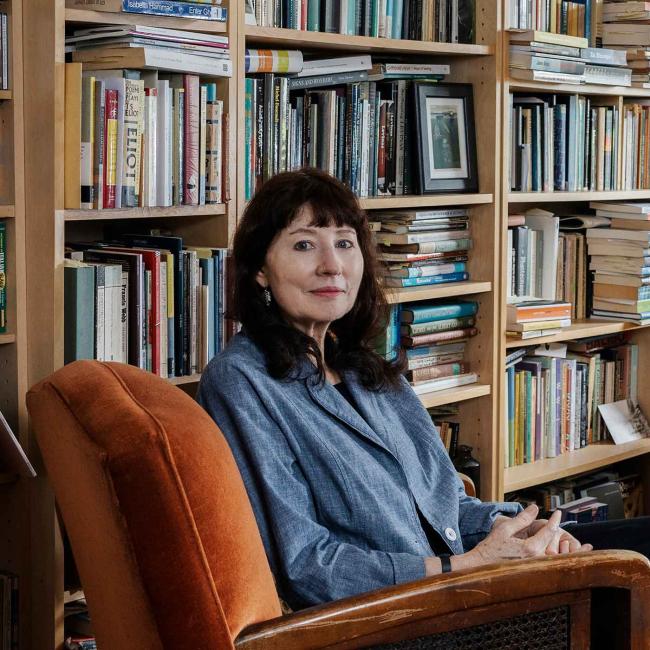
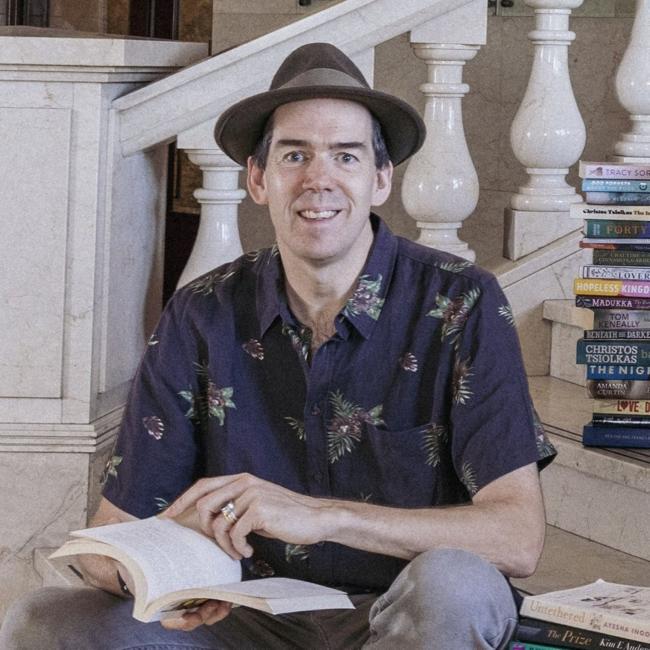
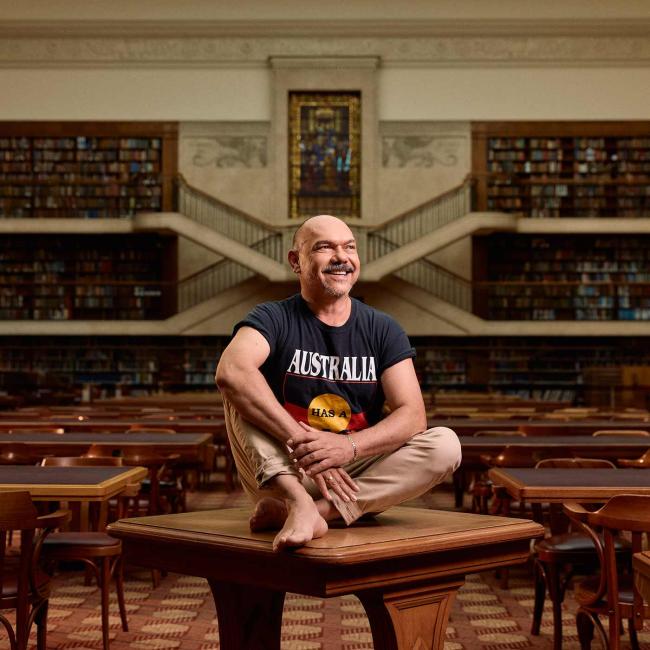
Photograph of a man in a hat sitting on marble stairs in a building, holding an open book with stacks of colorful books arranged on steps beside him. The setting includes white balusters and a plaque on the wall, suggesting a library or academic environment.

The library that made Jonty Claypole

Release Date

Jonty Claypole MBE – writer, podcaster and documentary producer – talks about the library that made him.

Episode Audio

LTMM_Podcast_Jonty_Claypole.mp3

Transcript

Welcome to the Library That Made Me Podcast.

I’m Phillipa McGuinness from the State Library of NSW. 

On this podcast, we ask some of Australia’s most loved writers, historians, thinkers and performers to reflect on the libraries that have shaped them.    

Today you’ll hear from Jonty Claypole. Jonty Claypole is CEO of Red Room Poetry and co-host with Sophie Gee of the popular podcast Secret Life of Books. 

Jonty Claypole

Despite what you might imagine, libraries and obsessive-compulsive disorder don’t go well together. Sure, there’s the cataloguing, the quietness, the shushing and firm finger-wagging, but the presence of other people remains a problem. Far from being quiet, they fidget, pick their noses, scratch their balls, giggle with their friends and flirt. While I have loved some libraries, I harbour unChristian feelings about the people I share them with.

Then there’s the books themselves. Stained, dog-eared, dirty and well thumbed. Some even have laminated covers, smudged with oily fingerprints like the windows of suburban trains. Libraries, like public transport, require frequent handwashing. The obsessive-compulsive’s favourite library is their private one. There alone, books can be controlled like citizens of a totalitarian state, through advanced strategies of population control. They can be regimented alphabetically, by genre, or according to colour (although police checks should be mandatory for those who practise the latter).

My library was formally established in 1995, when I unpacked two cardboard boxes in my narrow room on the ground floor of Peckwater Quad in Christ Church college at the University of Oxford. Less than 50 books in total. Half pilfered from my parents, without their permission, and therefore of dubious provenance. The other half legitimately purchased as part of the reading requirements before term began.

A new friend lent me his copy of Ian McEwan’s Black Dogs. His name was rubber-stamped inside the cover, with the legend ‘ex libris’ (Latin for ‘from the library of ‘) above, suggesting a vast room in the English countryside with south-facing windows, ornate shelves carved by Grinling Gibbons (the Michelangelo of woodwork), and books bound in the skin of unborn animals. Rather more modest than Virginia Woolf, I dreamed only of a rubber stamp of my own, through which to engineer the apotheosis of my paltry collection of paperbacks into a heavenly libris.

Oxford was full of bookstores. Brash, modern chains, like Waterstones, as well as down-at-heel second-hand stores like Mr Charrington’s shop in Nineteen Eighty-Four. The proprietors were dishevelled men in cardigans with an air of failed academia, multiple cat ownership and pornography.  

I dislike second-hand books for the same reason I dislike library books, but life on a student grant has its own compulsions. I acquired outdated editions of the classics. Dostoevsky and Tolstoy translated into Edwardian English (“It’s jolly cold, today,” said Raskolnikov). Zola with all the dirty bits excised. I was morbidly fond of an anthology of English poetry called Other Men’s Flowers, compiled by Field Marshal Archibald Wavell, whose authority in the field of poetry seemed to lie solely in the fact he defeated the Italian Army in Libya during World War II.  

My thirties were the golden years. Working for the BBC in London, I had a decent salary and no dependents. I could stop at Daunt Books near Broadcasting House in Marylebone and buy whatever I liked. First-hand, mind. I was done with other men’s flowers.

The glory days were short-lived. I fell in love and moved in with my girlfriend. Constance frowned as my best friend Roly and I carried in box after box of books, bickering and banging walls as we went. The Laurel and Hardy of intellectual colonisation. I put several boxes into the attic as a gesture of good will and assembled new bookcases in the spare room and on the upstairs landing to accommodate the rest.  

Then there was the question that Hamlet almost, but didn’t ask: to blend or not to blend? This was a proxy for deeper anxieties about cohabitation. Were we ready to fuse our personalities together? Biographies and exhibition catalogues were fair game, but there remained a metaphysical angst about novels and poetry. If her poetry mixed with my poetry, did we still exist as separate entities?

Over the years, these reservations fell away. The rate of acquisition doubled. Arranging our bookshelves was like three-dimensional Tetris, with micro-units of books laid horizontally across others or stuffed in behind. 

When our second child was born, we moved to a four-storey house near Hackney Marshes, in East London. This would be our forever home, where the kids would spend their childhood. We installed shelves in every room. Every book found its place. Our library was complete. Some cursory research revealed that customised rubber stamps weren’t even that expensive. Ex libris Jonty Claypole, motherfuckers!

A few months after moving in, we came to Sydney to see my mother, sister and wider family, who all live here. On a whim, we missed the flight home. Worried that our resolve would waver if we returned to put our affairs in order, we asked a friend to oversee the boxing and transport of all our belongings to that invisible country, the Republic of Storage (in this case, an old stable in Sussex). Four years on, we still have no space in our little Inner West rental to justify the shipping costs.

I check on my worldly goods whenever we visit the UK. Opening the hefty wooden doors of my father-in-law’s stable, I see box after box of clothing, knick-knacks, kitchenware, but most of all books, gradually succumbing to mould and damp. My ex libris.

We don’t have many books in our home in Forest Lodge. We buy from Sappho Books, a second-hand bookshop nearby, and borrow from Glebe Library. When I need to dig up something rare, I go to the State Library. Needless to say, I wash my hands a lot. 

Thank you for listening to the Library That Made Me. This podcast was produced on Gadigal land by the State Library of NSW. 
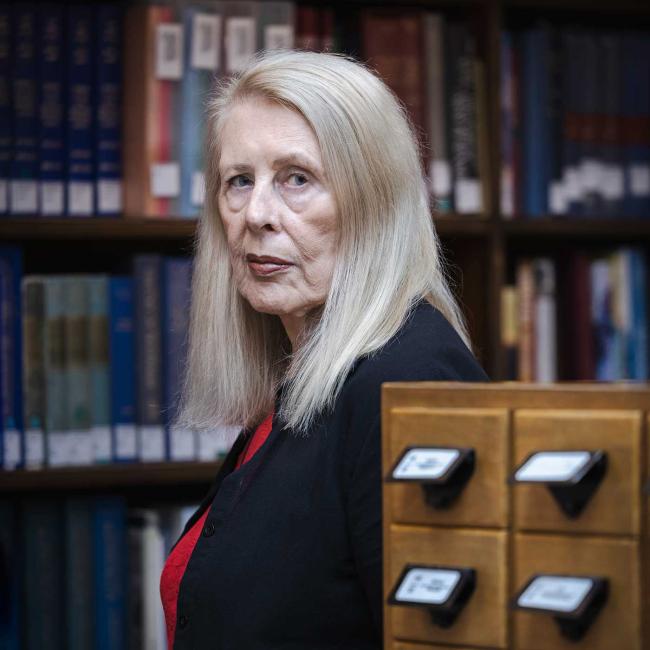
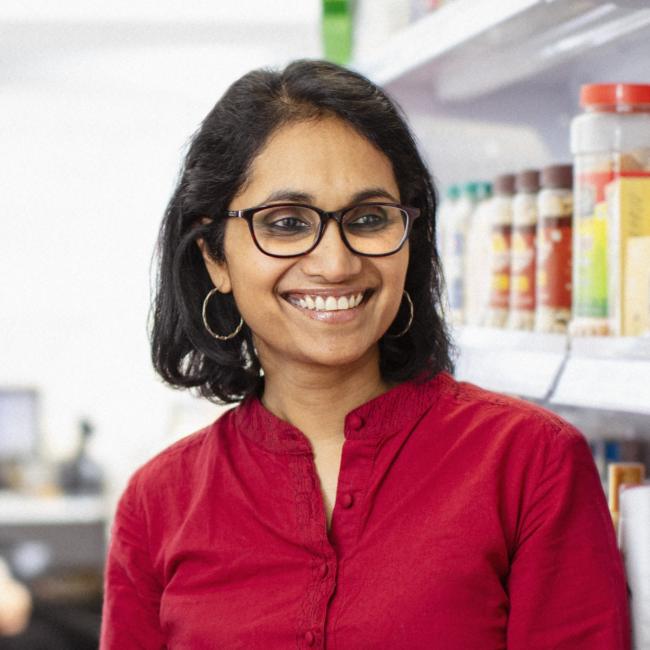
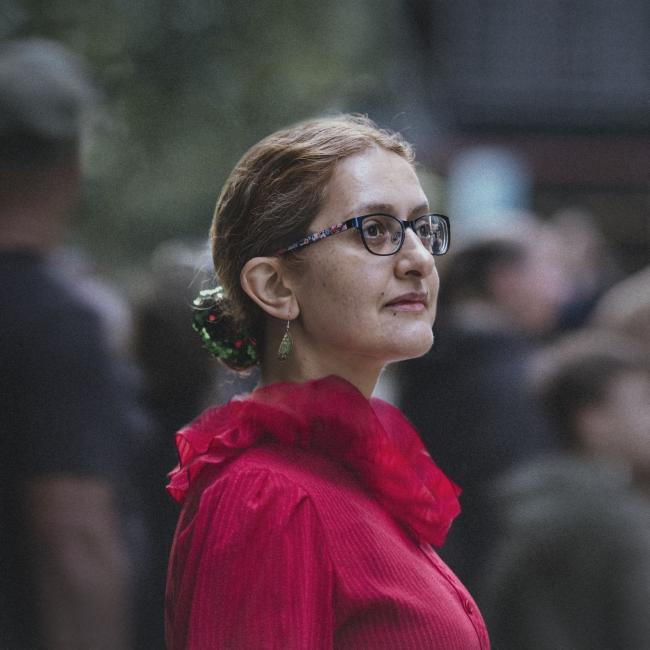
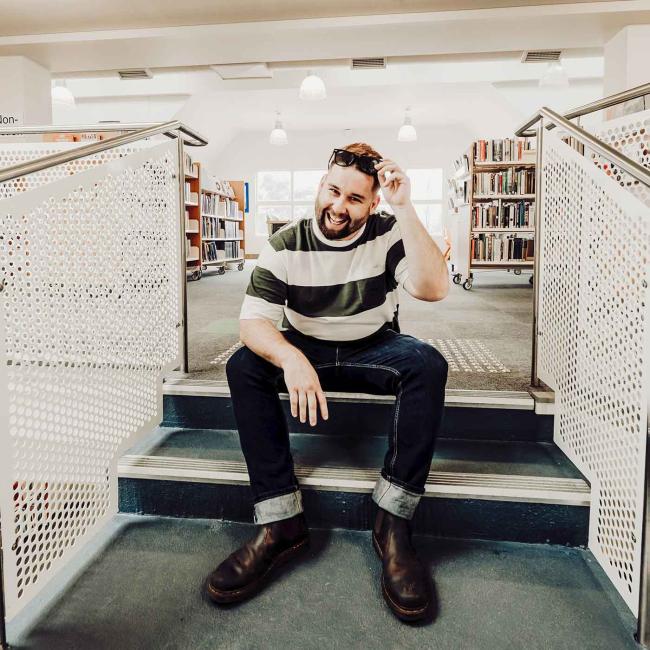
Photograph of a woman wearing glasses and a bright red blouse with ruffled collar standing outdoors among a blurred crowd. Focus is on the upper body and profile, highlighting a green hair accessory and dangling earrings against a soft, natural background.

The library that made Yumna Kassab

Release Date

Yumna Kassab – Western Sydney-based author – talks about the library that made her.


Episode Audio

LTMM_Podcast_Yumna_Kassab.mp3

Transcript

Welcome to the Library That Made Me Podcast. 

I’m Phillipa McGuinness from the State Library of NSW. 

On this podcast, we ask some of Australia’s most loved writers, historians, thinkers and performers to reflect on the libraries that have shaped them.    

You’re about to hear from Yumna Kassab. Yumna Kassab is a writer based in Western Sydney and was the inaugural Parramatta Laureate in Literature. She is the author of The House of Youssef, Australiana, The Lovers, Politica, The Theory of Everything and most recently, Goodbye My Love 

I’m Yumna Kassab and this is the library that made me.

Where was I at the start of 2020?

I had just returned from a big trip to South America, and a few months earlier my first book — The House of Youssef — had been released. My intention was to work in Tamworth for the duration of the school year and with this mind, I thought I should finally check out Dixson Library at the University of New England.  

My lifelong conundrum has been how to source the books I want to read without going broke in the process. It’s a dilemma that I’ve solved by immediately visiting the library in any place I’ve been, but access to a university library is a glorious thing, especially when it’s free to join for members of the local community.

I still remember that drive north from Tamworth to Armidale in the middle of February. It’s a peculiar mechanism of memory that most details fade and only some are committed to memory.

That was a particular drive: I was listening to Spanish songs and wondering how to explore the thread of Latin America that had opened up in my life. It also was the aftermath of the bushfires that had started burning in the September of the year before.

I had a mental goal as I arrived at the university. It was to fill out the application form to get my library card and then to find books relating to Latin America as per my reading list.

Labyrinths by Jorge Luis Borges was a long-ago discovery, and I’d read one book by Roberto Bolaño (Monsieur Pain) and one by Clarice Lispector (Água Viva). I hoped that this library trip would supplement the limited books already in my personal collection.

So I was issued a library card by security and I still remember the chat about the nutri­tional benefits of olive oil with a staff member at the front desk. Why is this the detail that remains and the rest have been wiped as if they never happened?  

Memory tends to hinge on the act of routine that is repeated, but this would be my first and last trip to the library, and what was to come has painted this day even more vivid in my memory.

I don’t remember the layout of the library but I know I made a beeline for the shelf where I would find Borges. My reasoning was he would have other Latin American authors on either side. That is how I ended up with the interviews compiled by Magdalena García Pinto in Women Writers of Latin America and The Total Library by Borges. I also borrowed Poet in New York by Federico García Lorca in a bilingual Penguin edition with a photo of the poet himself on the front.

My intention was to borrow these books and to return them at the end of the loan period. That is how life operates in a normal world: you make a plan and then take actions to see through the plan, but I did not end up returning those books in March as I originally intended. Instead, I ended up living in them across all of 2020, to the point where I would dream about Poet in New York and I could quote from that book of interviews.  

These were not my books and I felt entrusted with ensuring their safe return, but I was also grateful to have them during a time when bookstores were shut and libraries as well, as the world began to veer from a path of the predictable and normal. In the years ahead, there would be the pandemic with its lockdowns, there would be the death of two close friends, and the unbearable destruction of Gaza, and the realisation that I no longer knew what was meant by the word normal.

I play this trick at times, a writer’s sort of trick. I write a different return for those books. Rather than asking a friend heading to Armidale to return them for me at the end of 2020, I wind the clock back to March, and Yumna — with her borrowed books — is able to step into the library again as she intended. Had this happened, the world would have reset itself and I would have emerged once more to normality.

Of course this is ridiculous but it’s useful for carefully marking a line in my life.

There’s February 2020, the line, and then there’s this world that is exploding and crumbling at the same time. What existed before has been left behind and all I can hope is that at some point, a normal world will do its best to re-form and finally emerge. 

Thank you for listening to the Library That Made Me. This podcast was produced on Gadigal land by the State Library of NSW. 
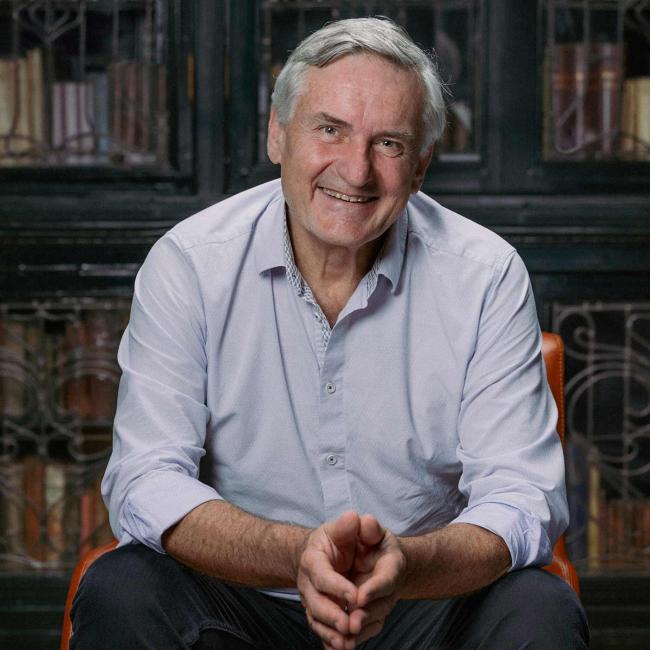
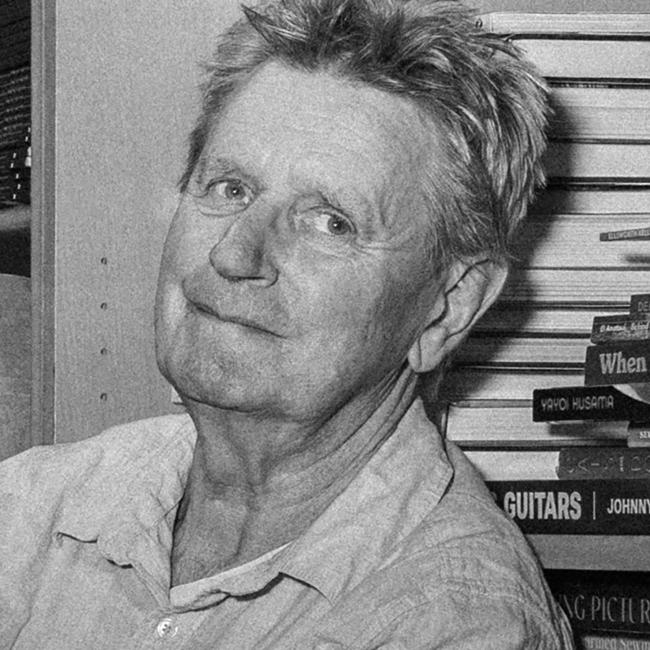
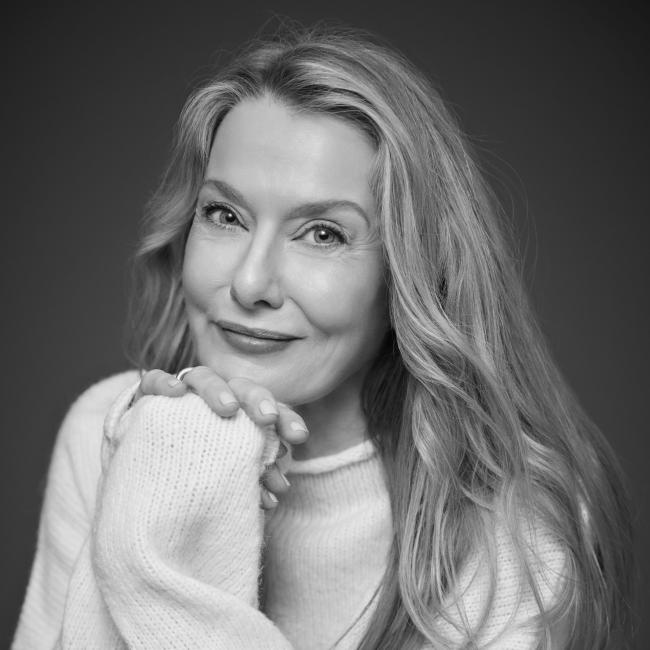
Black and white photograph of a woman with long hair wearing a cozy knit sweater, sitting with hands clasped near the face. The image focuses on texture and lighting, highlighting soft fabric details and hair strands against a plain dark background.

The library that made Anna Funder

Release Date

Anna Funder – award-winning author – talks about the library that made her.

Episode Audio

LTMM_Podcast_Anna_Funder_0.mp3

Transcript

Welcome to the Library That Made Me Podcast. 

I’m Phillippa McGuinness from the State Library of NSW. 

On this podcast, we ask some of Australia’s most loved writers, historians, thinkers and performers to tell us about the libraries that shaped them.  

Today you will hear from Anna Funder. Anna Funder is one of Australia’s most acclaimed writers. Her book Stasiland and All That I Am are prize winning international best sellers that have been translated into many languages. Her latest book Wifedom has been widely praised. Anna is professor of practice in creative writing at the University of Sydney.  

Anna Funder 

My first experience of a library was at seven, when we moved back to Melbourne from Paris. Standing among unpacked boxes and cases, my mother said, ‘Let’s leave all this. I’m taking you kids on a walk. To a surprise.’ My brothers and I followed Mum, walking what seemed like a long way — I know it’s only a few blocks now — to the local library, in Carlton. In the entry there was a box of kittens being given away — Mum had seen a flyer. We chose a sweet black one and called him Minou (puss), and we children whispered secrets in his ear all his life. He kept them.

We probably took home books as well. Books too, contained all kinds of secrets between the covers, ones that were shared between you and the writer, ones that the world didn’t tell you out loud. I have marvelled at, and in, libraries all my life. The hum of intense reading that thickens the air. The idea that whatever local library you’re in, a kind, soft-shoed librarian will, after only a few quiet words, bespoke fit you with the book you need. More, they will find any book from anywhere on the planet and call it in, by mail or bus or train or plane, just for you. It’s as if, in their capable hands, every aspect of the world, past or present, can be sifted and sorted, all Dewey-numbered and delivered — for free.

It shocks me that libraries haven’t always been like this everywhere, for everyone, as a right. Of course I know that long ago barely anyone could read, that knowledge was locked up like powerful drugs, contraband or spells, in monasteries. But it’s so relatively recent — only from the late 1800s — that the campaigns for free universal education, and free libraries, have led us to where we are now.

One of the most beautiful libraries I’ve ever seen was one of the earliest of these, the Staatliche Bibliothek at Neuburg an der Donau, in Bavaria. The collection started during the ‘secularisation’ period in Germany from the early 1800s, when books from monasteries and convents were taken and made available to the people. It is housed in a magnificent, double-height baroque oval room, with a walkway all around the rim of the first floor. The ceiling is gilded and gold angels watch over everything, as if to bless knowledge, imagination, incunabula.

As a student in West Berlin in the 1980s, I worked at the breathtaking Staatsbibliothek in Berlin, a 1960s Hans Scharoun–designed building erected in the lee of the Berlin Wall. Inside, the spaces are open, airy, as if to leave room for thought to soar. The feeling I had in there seems, in retrospect, to be the essential feeling I get in all libraries, old or new, local or grand, and it is defined, again, by an angel. Not in gilded wood this time but in the shape of a real man, actor Bruno Ganz — liquid brown eyes, hangdog handsome — in an overcoat. In Wim Wenders’ film Wings of Desire, Ganz’s angel haunts this library. Invisible to the people studying or reading at the desks, he approaches them and listens in on their thoughts, worries, hopes. He is the essence of attention and compassion.

Back at university in Melbourne, I got one of the best jobs of my student days in the English Department Library. It sounds prehistoric now, but I sat at the front desk, typing out index cards for new acquisitions or requests from staff for books or journals — anything from the latest novel, to psychoanalysis, poetry or medieval studies. I read things that had nothing to do with my studies: a smorgasbord of serendipity. Despite my time there, I have never understood the Dewey decimal system: how can numbers tell you what a book is, to a decimal point?

But the library that most made me was the Baillieu Library, at Melbourne University. A multistorey building, the Baillieu had every book you could want and many more, and carrels where everyone studied, piles of books and notebooks next to them. My most profound memories are not of finding what Dewey told me I was looking for, but the excitement of finding what was next to it: things you’d never discover if you followed only reason, or numbers, or an algorithm. Almost 40 years later I see that I have been fruitfully sidetracked my whole life.

The best thing I came across in there I wasn’t looking for either. He was in another carrel, reading architecture books. Utterly unclassifiable, I have had him out ever since, on long-term loan. 

Thank you for listening to the Library That Made Me. This podcast was produced on Gadigal land by the State Library of NSW.
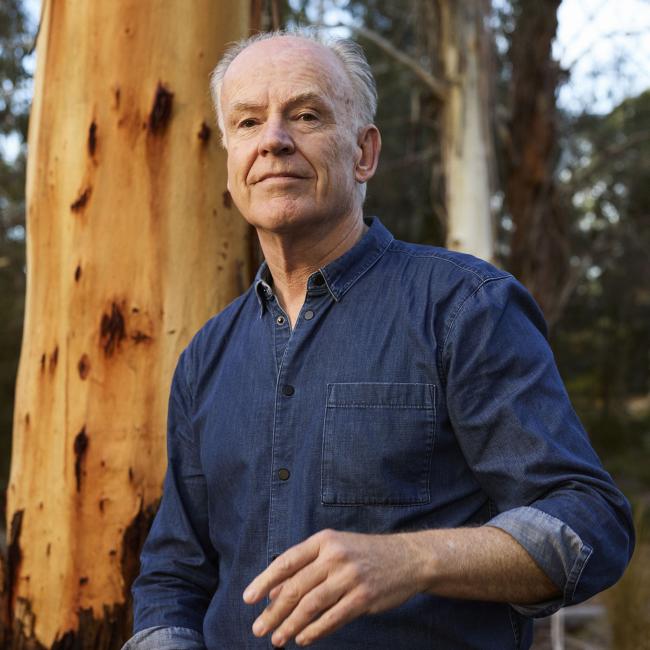
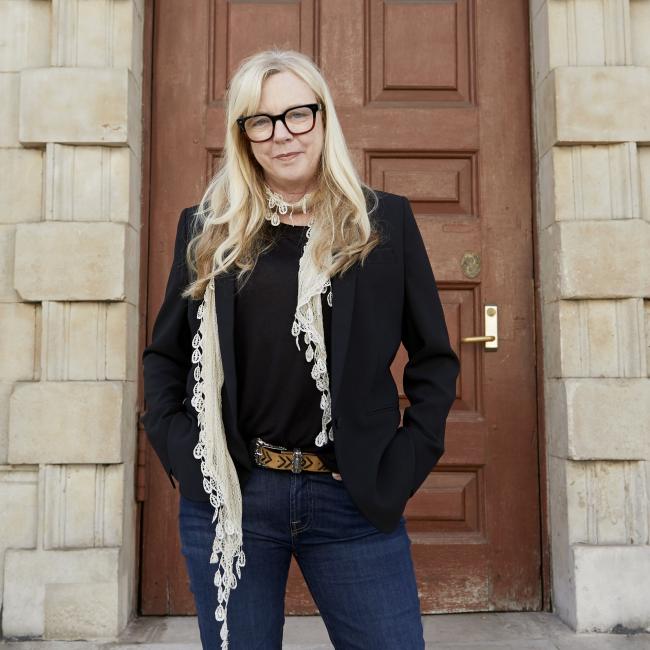
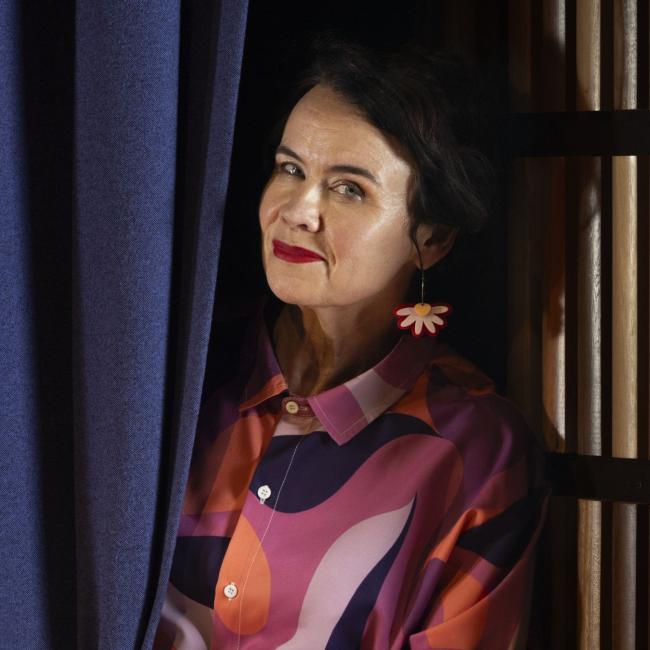
Photograph of a woman partially hidden behind dark blue curtains, with only their upper body visible. The person wears a colorful, patterned shirt with shades of pink, purple, and orange, standing against a dimly lit background with wooden elements.

The library that made Kate Evans

Release Date

Dr Kate Evans – radio producer, presenter and critic – talks about the library that made her.

Episode Audio

LTMM_Podcast_Kate_Evans.mp3

Transcript

Welcome to the Library That Made Me Podcast. 

I’m Phillipa McGuinness from the State Library of NSW. 

On this podcast, we ask some of Australia’s most loved writers, historians, thinkers and performers to share stories about the libraries that shaped them. 

First up, you’ll hear from Kate Evans. Dr Kate Evans is a radio producer, presenter and critic. She is also co-host of The Bookshelf on ABC’s Radio National. I’m Kate Evans and this is the library that made me.

Dr Kate Evans

Dapto Public Library see also Fisher Library see also Mitchell Library Reading Room. See also card catalogues. See also finding new — or maybe an old — world. 

I have started this reflection in three different ways, in three different libraries, trying to work out what it is I’m trying to pin down when thinking about what libraries have done to me, and for me. It’s made me re-open boxes of research papers, do online catalogue searches, try to find photographs of buildings since demolished; it has forced me to look through folders of copied papers and photographs, to find handwritten notebooks and to notice marginalia (‘tell Jane, Royal Tour menu’; ‘show Ian, Great Fleet pics’, not to mention phone numbers of people whose names I don’t recognise at all). What am I looking for? Is it a memory, is it an argument, is it a way of experiencing the world?

I’ve decided to ditch the obvious catalogue card, the one with the origin story: Library see Dapto Public Library see also Dapto Primary School library see also story of tiny woman in floral shift with large pile of books.  

Despite the satisfaction of the old working-class-kid-gets-to-university narrative, I decided that card was one we’d all seen before too: University see Fisher Library see View over a park see New Life see also What Next?  

Because really, it’s a combination of wide desks in a beautiful space and a particular set of catalogue drawers that shaped me as a thinker and a researcher, and they’re all in the reading room at the Mitchell Library. This is the library that not only changed me, it remains my image of what a library is and can be.

It’s also probably why, as I read books to deadlines every week in my job as a broadcaster/reviewer/arts journalist, my preferred method is to sit at a wide table in the rather vain hope of evoking a calm space in the midst of work and domestic chaos. My haphazard piles of books and paper lean precariously towards the ordered shelves I long for, the basement levels that really would make life a lot easier, if only they could be tunnelled out.

Because early in my research life (a Masters in Public History, a PhD, work as an academic researcher and later a TV researcher for a big history project), I discovered the delight of the card catalogue at the Mitchell, preserved as part of its bequest, but preserving too the work of individual librarians. Both ordered and surprising, constrained yet able to open up entire worlds of ideas.  

I used to investigate any new area by taking out entire drawers, sitting at a table, and reading through every entry under that subject, because what it revealed was a changing world, new (or helpfully, old) taxonomies of knowledge, and highly specific references. It brought me into the sphere of librarians whose handwriting I came to recognise, even if I never knew who was who and which one really was Ida Leeson (who I’d read about, whose hands were all over those cards).  

Photograph, see photographer, see photographs, see photography, see Photo – engraving. See also chalk-plate process.

So, Something Something Something see also Inebriates Home. I wish I could remember what took me there. I do remember that I was chasing various institutions at one point for histories of the homeless and destitute, or those in quarantine, when I found the card that said, ‘See also Inebriates Home’. Just think of the historical and cultural work that phrase offers.

For years, I was working on the history of journalism and then on the history of press photographers in Australia. I remember reading the papers of one journalist, from the late 19th century. There were four boxes of papers of his life and work, covering the years 1888–1908.* I knew when Queen Victoria had died in 1901 because suddenly letters were edged in black — a reminder of how tactile and physical is the work of research. The materiality of it, the press of a pen into paper from a century before. But this one stays with me because in the midst of tracking a career and trying to understand ‘press workers’, I was caught up in letters from his sisters, in stories of an affair, abortion, the legitimacy (or not) of his daughter, a divorce scandal and the oddity of the fact his wife was hardly ever referred to by name, but instead was called ‘Baby’ by the family.

What’s the point of that anecdote? It has stayed with me: it haunts me in the same way that, looking at historical photographs, I came to always notice the characters at the side, the figures in the crowd who’d seen the camera, the kid with no shoes climbing a pole, the men in street scenes with toddlers on their hip. The woman with the defiant jawline. All that detail that helps animate the past. But also, all that material, all those stories that are inside these libraries that have made me.  

It’s that mix of order — catalogued, listed, indexed, put into reading and research guides — and the wildly eclectic, surprising, personal, contradictory, wilful, astounding stories that can be found there, that shows me some small part of what libraries can do. What they have done for me. 

Thank you for listening to the Library That Made Me. This podcast was produced on Gadigal land by the State Library of NSW.
Promotional graphic for State Library NSW titled "The Library That Made Me," featuring a light green background with black text and vertical book spine shapes containing small photos of diverse individuals. The design emphasizes personal connections to the library through visual elements resembling books and portraits.